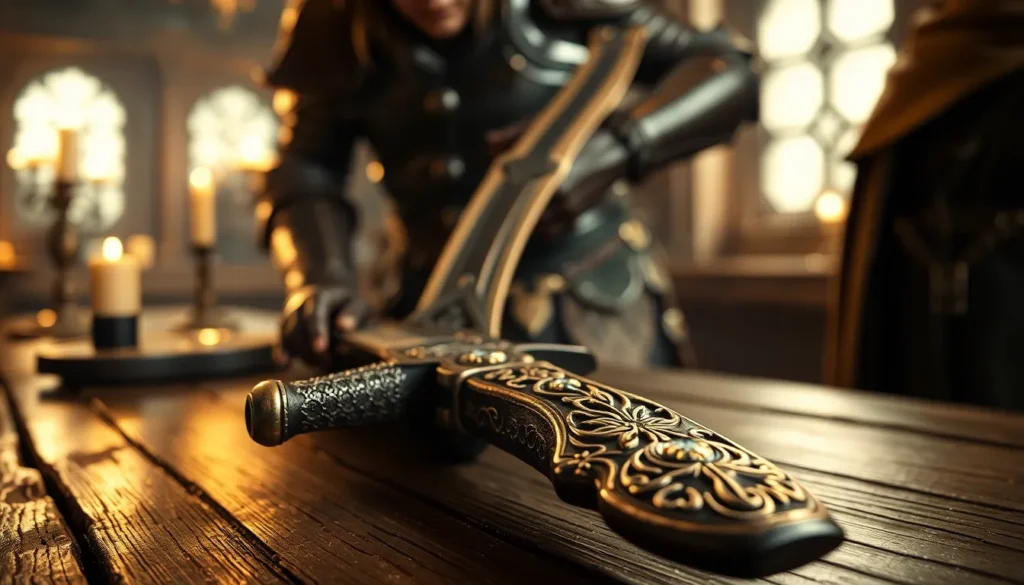
In the fantastical realms of role-playing games, weapons aren’t just tools—they’re extensions of a player’s identity. From swords that sparkle with magical energy to guns that shoot rainbows (yes, really), RPG weapons add flair and excitement to every adventure. They’re the trusty companions that help heroes slay dragons, defeat villains, and occasionally save the world (or at least a small village).
What Is An RPG Weapon?
An RPG weapon refers to any device designed for combat or defense within role-playing games. Players use these weapons to enhance gameplay, allowing characters to engage enemies effectively. Various types of RPG weapons exist, including swords, axes, guns, and magical artifacts. Each weapon type offers unique attributes and benefits, influencing a player’s strategy.
Many RPG games incorporate a wealth of customization options for weapons. Changes can include upgrades, enchantments, and modifications. These features allow players to tailor their weapons to suit specific play styles or quests. In turn, a carefully chosen weapon can significantly impact a character’s performance.
Understanding the mechanics of RPG weapons enriches player experience. Players often strategize which weapons to equip based on their characters’ skills and the challenges encountered in the game. Many popular RPGs feature classes that specialize in particular weapon types, such as archers focusing on bows or wizards utilizing staffs.
Additionally, the lore surrounding RPG weapons enhances the immersive experience. Often, weapons come with histories that tie them to the game world, adding depth to their use. Legendary artifacts may hold special powers or be key to completing quests, making them more than just tools for battle.
Ultimately, RPG weapons play a crucial role in defining a player’s journey through their chosen narrative. He or she can build a character’s identity around these weapons, fostering a deeper connection to their avatar within the game universe.
Types Of RPG Weapons

RPG weapons come in various types, each tailored to enhance gameplay and storytelling.
Portable RPGs
Portable RPGs typically refer to personal weapons that characters can carry and use during their adventures. Examples include swords, axes, and bows, which allow for direct combat. Players often choose portable RPGs based on their character’s abilities and the combat style they prefer. Each weapon offers distinct advantages, influencing the player’s strategy in battles. For instance, a sword might provide quick attacks, while a bow allows for ranged combat. Customization options abound, letting players upgrade these weapons to enhance damage or add special attributes. These personal weapons contribute significantly to the character’s identity and effectiveness in quests.
Vehicle-Mounted RPGs
Vehicle-mounted RPGs represent larger, more powerful weapons designed for use on vehicles during combat scenarios. Examples include grenade launchers and missile systems affixed to armored vehicles. These weapons deliver devastating firepower and often target enemy units from a distance. Players can utilize vehicle-mounted RPGs for strategic advantage in larger battles, enabling mobility combined with offensive capabilities. Vehicles equipped with such weapons can cover more ground, making them essential for team tactics. Effective coordination with teammates maximizes the impact of vehicle-mounted RPGs, influencing the overall outcome of missions.
How RPG Weapons Work
RPG weapons function through complex systems that enhance gameplay and strategy. Understanding these systems fosters a deeper appreciation for their roles in the game.
Propellant Mechanism
Propellant mechanisms are essential in RPG weapons, determining how projectiles launch. Common systems include chemical propellants found in conventional firearms and mechanical systems in melee weapons. Players often select weapons based on their characters’ needs; for example, a player might choose a long-range bow for stealth or a powerful crossbow for brute force. Each type of RPG weapon utilizes unique propellant principles that influence damage output and range. Selecting the right propellant mechanism can enhance effectiveness during encounters.
Guidance Systems
Guidance systems in RPG weapons ensure projectiles reach their targets accurately. Standard techniques consist of laser-guided targeting and homing technology, providing players with strategic advantages. Characters equipped with weapons featuring advanced guidance systems may succeed in difficult scenarios. Players benefit from utilizing these systems, often enhancing their combat effectiveness. Some RPGs incorporate magical elements as a form of guidance, adding another layer of strategy. Effective use of guidance technology can turn the tide in challenging battles.
Historical Development Of RPG Weapons
RPG weapons evolved significantly over time, influenced by historical warfare and technological advancements. Early RPGs often featured swords and bows, mirroring real-life weaponry. These basic tools laid the foundation for more innovative designs in subsequent games.
Magical weapons emerged alongside traditional arms, enriching the gameplay with fantasy elements. Swords infused with enchantments or bows that fired elemental arrows became popular choices. Such diversity allowed players to express creativity in weapon selection and character customization.
By the late 20th century, RPGs embraced firearms, reflecting contemporary advancements in warfare. These developments introduced guns like handguns and rifles, providing distinct gameplay mechanics compared to melee weapons. Players found new strategies and styles through these ranged options.
Moreover, the integration of technology in RPG weapons transformed gameplay dynamics. Players encountered intricate systems such as propellant mechanisms and advanced targeting methods. These innovations enhanced both the realism and challenges faced within the game environment.
Role-playing games began to feature weapons with rich backstories, creating deeper narratives. Legendary swords often had histories tied to heroes or ancient battles, enriching the overall storytelling experience. Weapons became symbols of achievement, further motivating players on their quests.
As RPGs advanced into the 21st century, customization options intensified, providing players the ability to modify weapons extensively. Upgrading attributes like damage and elemental effects now drives player choices, allowing unique configurations that suit individual gameplay styles.
The continuous evolution of RPG weapons reflects players’ demands for immersive experiences. This ongoing development shapes not only strategy but also emotional connections, solidifying the importance of weapons within the RPG community.
Modern Uses Of RPG Weapons
RPG weapons find extensive application in both digital and tabletop formats. In many online games, character customization plays a vital role, allowing players to upgrade weapons regularly for enhanced performance. Upgraded swords, for instance, might feature improved damage stats or special abilities that create strategic advantages during combat.
Tabletop RPGs also leverage weapon variety to deepen the immersive experience. Players often choose different weapons based on the lore and characteristics of their characters. A wizard may wield a staff, while a rogue might opt for dual daggers, each selection impacting gameplay and decisions.
Certain game mechanics further illustrate modern RPG weapon use. Often, RPGs include crafting systems where players collect materials to forge new weapons or modify existing ones. This crafting functionality not only enhances gameplay but strengthens player investment in their journey.
In competitive environments, RPG weapons influence gameplay strategies. Players frequently analyze weapon properties to identify the best fit for various scenarios. They may select ranged weapons for stealthy approaches or melee weapons for close encounters, showing an understanding of combat dynamics.
Some RPGs feature weapons tied explicitly to character progression. As characters level up, they unlock unique weapons that align with their development path. These weapons not only provide unique abilities but often carry rich backstories that enhance the overall narrative.
Overall, these weapons serve a dual purpose in game narratives and mechanics. Use of RPG weapons shapes player interactions, strategy, and character development, making them integral to any RPG experience.
RPG weapons are far more than just instruments of combat; they embody the essence of a player’s journey. By choosing and customizing these weapons players forge a deeper connection to their characters and the narratives they inhabit. The variety and evolution of RPG weapons not only enhance gameplay but also enrich the storytelling experience.
As players navigate their adventures they rely on these weapons to define their strategies and approach to challenges. Whether through magical swords or high-tech firearms each weapon contributes to a unique gameplay experience that resonates on both a mechanical and emotional level. The ongoing development of RPG weapons continues to shape the landscape of role-playing games making them an essential aspect of the genre.